 Italiano
 Deutsch
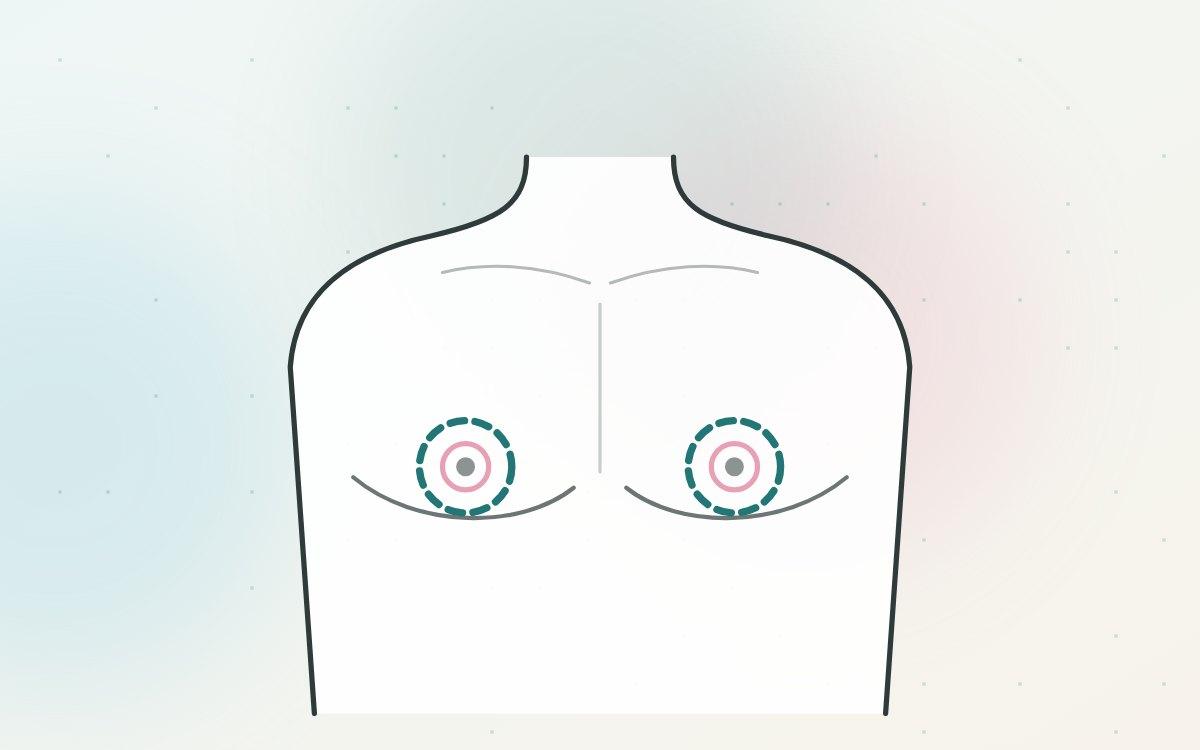
Periareolar top surgery, also called the concentric circle or donut technique, removes tissue through an incision around the areola. It suits small to medium chests with good skin elasticity and leaves less scarring than double incision.
What is periareolar top surgery?
Periareolar top surgery is a mastectomy technique in which breast tissue is removed through a circular incision around the areola, taking out a donut-shaped ring of skin. The nipple stays attached to the underlying tissue and the scar is limited, but it mainly suits small to medium chests with elastic skin.
In periareolar mastectomy the surgeon makes two concentric circular incisions around the areola: one along its edge and a larger one outside it. The ring of skin between the two circles (hence the names donut or concentric circle) is removed, and breast tissue is taken out through this opening, often with the help of liposuction. The outer skin is then gathered and closed around the areola with a purse-string suture.
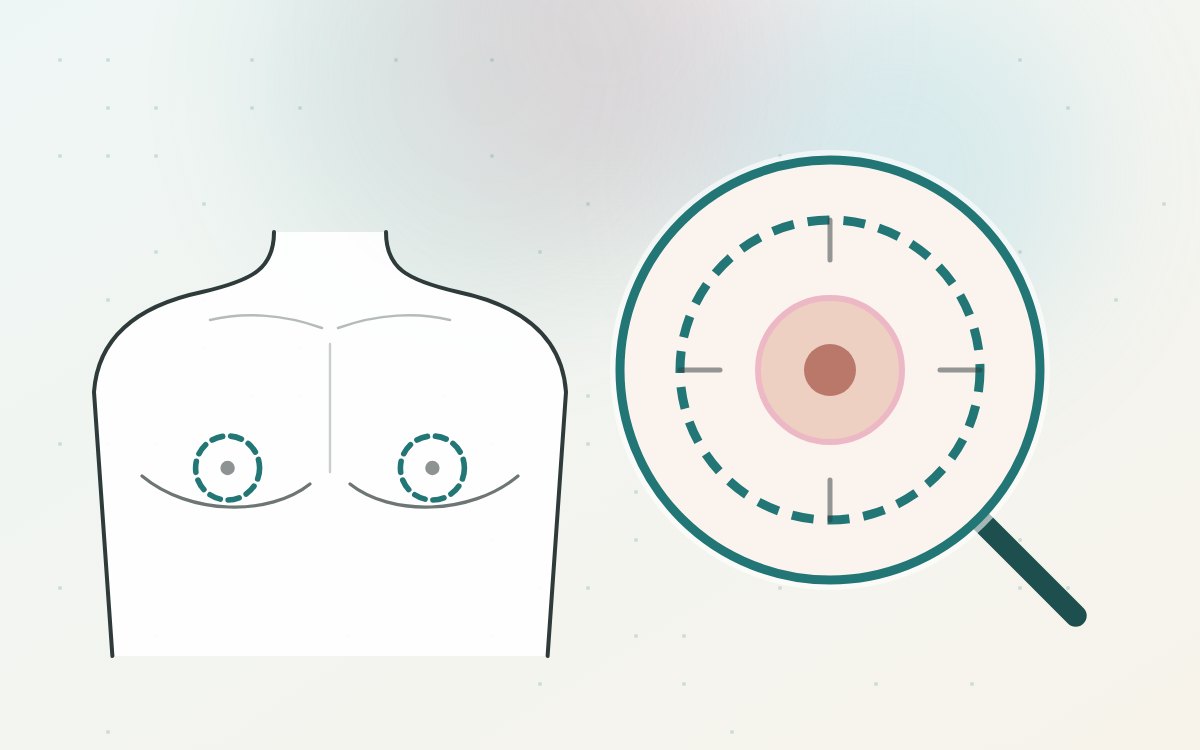
With this technique the nipple usually stays attached to the underlying tissue on a pedicle rather than being fully removed. As a result, nipple sensation is preserved more often than with free grafts, although this is not guaranteed. The areola can also be reduced in diameter at the same time.
Who is it suitable for?
| Criterion | Ideal situation |
|---|---|
| Chest size | Small to medium (roughly up to a small B cup) |
| Skin elasticity | Good – the skin retracts well after tissue removal |
| Nipple position | No or only mild sagging |
| Main goal | Smaller scars and a better chance of keeping sensation |
| Openness to revision | Accepting that a touch-up may be needed |
With a larger chest or less elastic skin, the remaining skin may not retract enough and double incision usually gives a flatter result. For very small chests the surgeon may consider the keyhole technique. Our guide on choosing a technique compares all options; the final decision always rests on the surgeon's assessment.
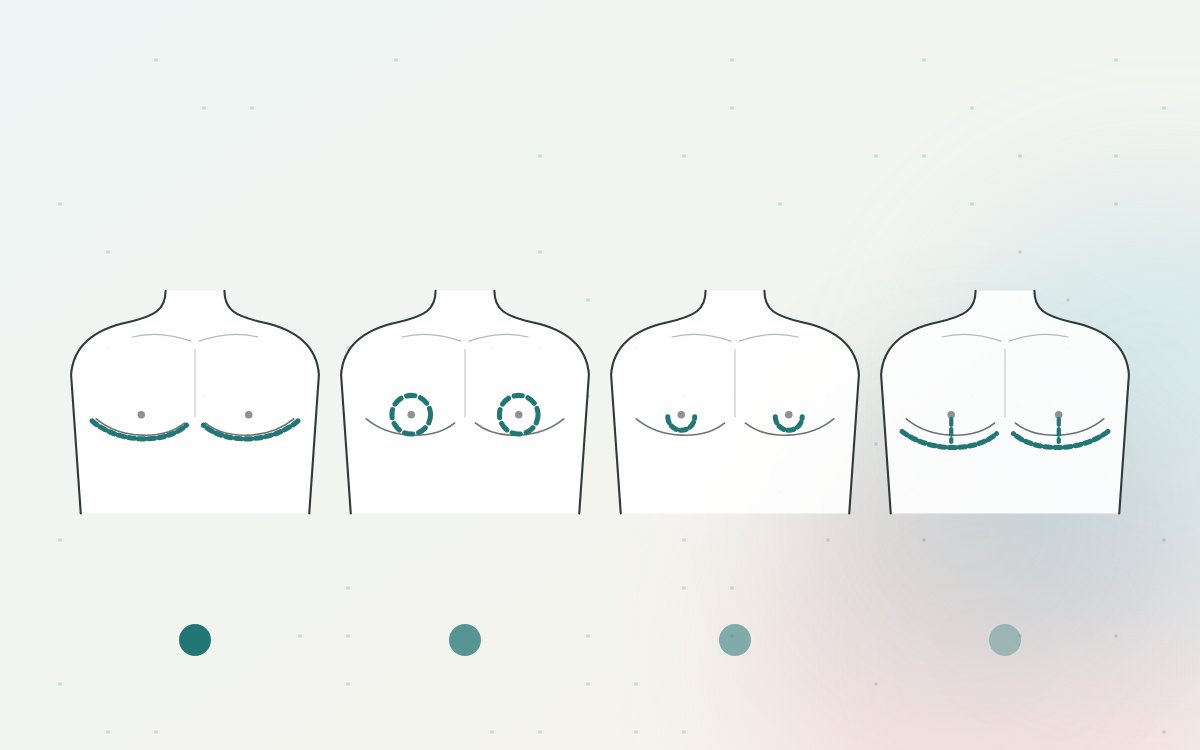
For the bigger picture, our overview of all top surgery procedures summarises the key differences between the surgical options.
How periareolar mastectomy works
- Anaesthesia: general.
- Duration: usually around 2–3 hours, depending on volume and liposuction.
- Hospital stay: often one night at the clinic.
- Drains: not always needed; if used, usually for a few days.
- Compression vest: worn for several weeks to help the skin settle onto the new contour.
In the weeks before surgery it is important to stop smoking and follow advice on medication and supplements – see our guide on preparing for top surgery. Requirements, recovery and practical questions are covered in our complete top surgery guide.
During the consultation, it helps to ask the surgeon how often they perform this technique, which chest types they consider suitable, how they handle residual skin, and what a possible revision would involve in terms of timing and cost. Clear answers to these questions make it easier to set realistic expectations before you decide.
Donut top surgery scars and results
With periareolar top surgery the scar runs around the areola, at the natural border between darker and lighter skin, so it is often less noticeable. In the first months the skin around the areola may show pleats or puckering from the purse-string closure; these often soften over time but do not always disappear completely. The areola may also stretch slightly or become less regular in shape during healing. More in our guide on top surgery scars.
Because the surgeon has less scope to remove excess skin, the final contour may be slightly less flat than with double incision. According to the literature, revision rates (for residual skin, contour irregularities or asymmetry) tend to be higher than with long-incision techniques.
Recovery, risks, pros and cons
Recovery is similar to other techniques: roughly 1–2 weeks before returning to desk work, several weeks without heavy lifting and about 6 weeks before strenuous exercise. Details are in our top surgery recovery guide.
Risks include hematoma, seroma, infection, impaired blood supply or partial loss of the nipple, sensation changes, residual skin, contour irregularities, widened scars and the need for revision.
| Pros | Cons |
|---|---|
| Limited scar around the areola | Only for small/medium chests with elastic skin |
| Nipple sensation preserved more often | Possible puckering and residual skin |
| Areola reduction in the same operation | Limited control over nipple position |
| No grafts to care for | Higher likelihood of revision |
Periareolar top surgery cost and consultation
Price depends on technique, surgeon and package; as an indication it is similar to other mastectomy techniques. See our guide on top surgery cost; a written quote is always required.
To compare prices, waiting times and services between countries, browse our top surgery destinations in Europe and worldwide, such as top surgery in Turkey or top surgery in Italy.
Want to know whether periareolar top surgery could work for your chest? Request a free top surgery consultation: after reviewing your photos, an experienced plastic surgeon will explain your realistic options.
Sources and further reading
- Standards of Care for the Health of Transgender and Gender Diverse People, Version 8 – WPATH – International Journal of Transgender Health (2022)
- Schedule Gender-Affirming Surgery (Mastectomy – requirements) – Cleveland Clinic
- Techniques for Preserving the Nipple Areolar Complex in Chest Masculinization for All Chest Sizes – Cureus (2025), PubMed Central
- Postoperative care and common issues after masculinizing chest surgery – UCSF Transgender Care
- Top Surgery – TransHub – ACON (NSW, Australia)
Last checked: 10/2026
Frequently asked questions
The nipple stays attached to the tissue on a pedicle, so sensation is preserved more often than with free grafts. It is not guaranteed, however: it may be reduced, temporarily or permanently.
Less skin can be removed with this technique. If the skin does not fully retract, pleats, excess skin or small irregularities may remain and sometimes need a revision.
Usually not: with more volume or less elastic skin the result tends to be less flat. Only a surgeon can assess this after an examination or photo review.
It often softens over the following months as the skin settles. In some people it stays visible and can be corrected with a minor touch-up.
Roughly 1–2 weeks before desk work and about 6 weeks before strenuous exercise. Read our top surgery recovery guide.
Request your free consultation
Tell us briefly what you are looking for: we usually reply within 24 hours, with no obligation.
- Multilingual support
- Written, transparent quote
- Follow-up after you return