 Italiano
 Deutsch

Non-binary top surgery shapes the chest around your own goals: completely flat, reduced or nipple-free. The techniques are the same as in subcutaneous mastectomy, but the plan is made together with your surgeon.
What non-binary top surgery means
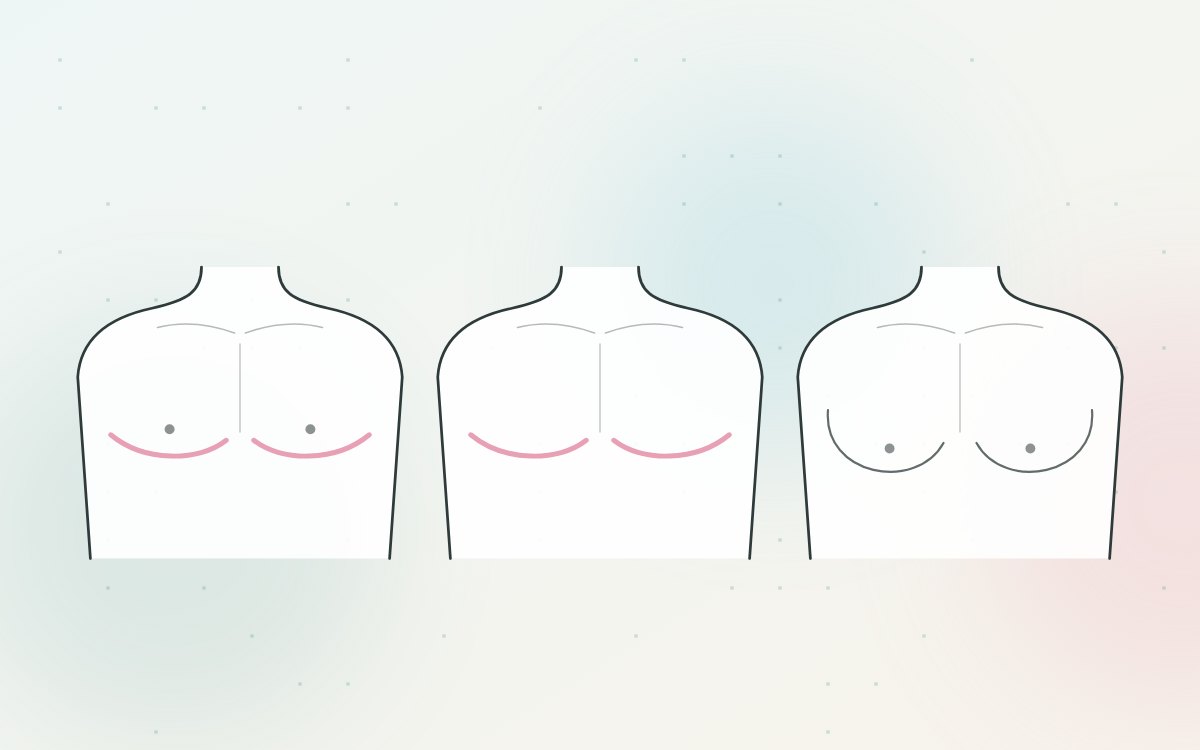
What is non-binary top surgery? It is chest surgery planned around the goals of non-binary people: a flat chest, a reduction that keeps some volume, or a nipple-free result. Surgeons use the same techniques as subcutaneous mastectomy, chosen by chest size, skin and nipple position, and hormone therapy is not a requirement.
"Non-binary top surgery" is therefore not a separate surgical technique but an approach. The operation is planned around what you want to see in the mirror, without assuming that the goal is a classically "male" chest. Many non-binary, agender or genderfluid people want a chest that is simply flat and neutral; others prefer a reduction that keeps some volume; others choose not to have nipples at all.
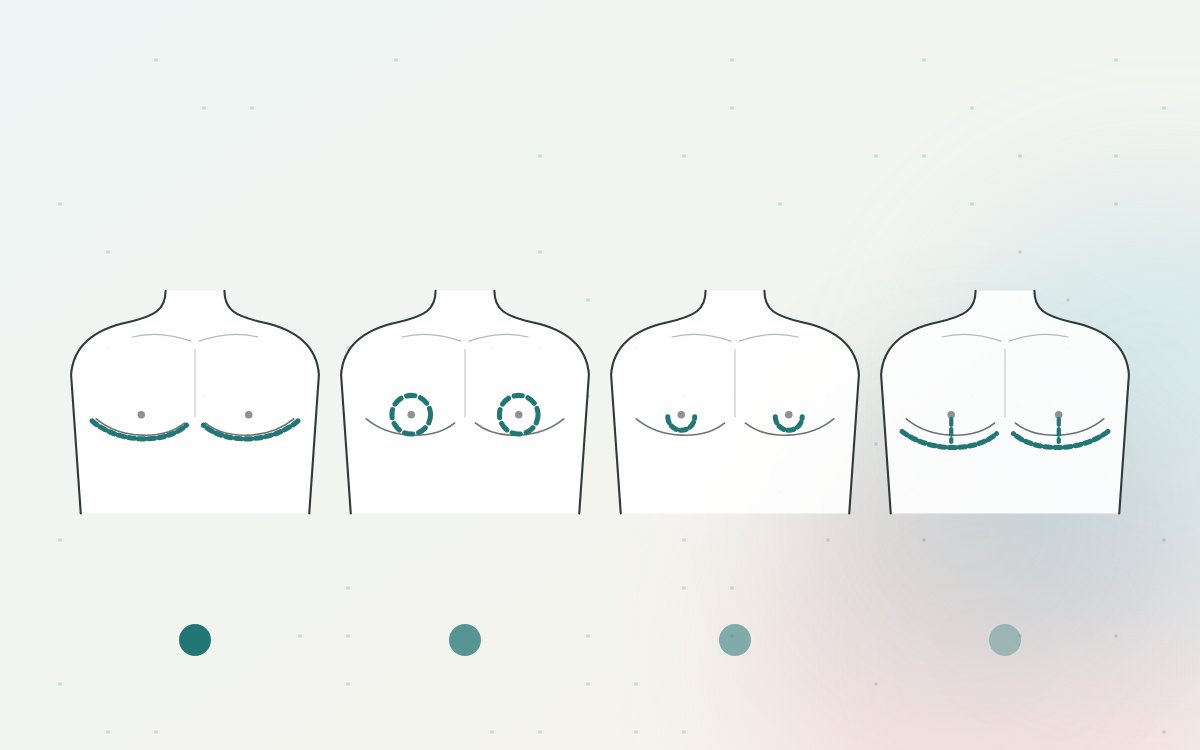
The surgical tools are the same as in chest masculinization, described in our overview of all top surgery techniques: double incision, periareolar, keyhole and buttonhole / inverted-T. What changes is how they are used and what result they aim for.
The options: flat chest, chest reduction or nipple-free
| Goal | What it involves | Things to consider |
|---|---|---|
| Flat chest | Removal of almost all glandular tissue and excess skin for a smooth, flat contour | The contour can be less "sculpted" than a defined pectoral look, if that is what you prefer |
| Chest reduction | Some tissue is deliberately left for a smaller but not fully flat profile | Residual volume is hard to predict exactly; touch-ups are sometimes needed |
| Nipple-free | The nipple-areola complex is not grafted back; only the scars remain | Effectively permanent; tattooing or reconstruction later is possible but not identical |
| Nipples kept | Free nipple grafts (double incision) or nipples on a pedicle (periareolar, keyhole, buttonhole) | Size, shape and position are agreed before surgery |
Talk about this openly at your consultation. Bringing reference pictures and explaining what feels right for you helps the surgeon understand your goal. A good surgeon should not push you towards a standard outcome.
Who non-binary top surgery is for
It suits adults who are non-binary or gender non-conforming and experience persistent distress related to their chest. According to the WPATH Standards of Care 8, the key criteria are marked and sustained gender incongruence, capacity to give informed consent, age of majority and other significant health conditions being reasonably well controlled; a breast cancer risk assessment is recommended before surgery.
Hormone therapy is not a requirement for top surgery. Many non-binary people do not take testosterone, or take it at low doses, and can still have surgery. Some surgeons or clinics may ask for a letter from a mental health or health professional; we check this with you in advance. More in our guide to top surgery requirements; every other topic, from preparation to scars, is collected in our complete top surgery guide.
How the procedure works
The technique is chosen with your surgeon based on chest size, skin elasticity, nipple position and your goals. Larger chests or less elastic skin usually call for a double incision, which also makes a nipple-free result straightforward. Small chests with firm skin may be suitable for techniques with shorter scars. For a reduction, the surgeon decides how much tissue to leave and shapes it evenly.
Surgery is done under general anaesthesia and usually takes two to four hours. Stopping smoking for several weeks before and after is strongly advised, as nicotine impairs healing. See preparing for top surgery for the full checklist, and choosing a technique for a comparison.
Scars, recovery and risks
Scars depend on the technique: long scars under the pectoral line with double incision, scars around the areola with periareolar-type techniques. They usually fade over 12–18 months; see our guide to top surgery scars. Recovery is the same as for any top surgery: a compression vest for several weeks, desk work typically after 1–2 weeks, lifting and sport later (see top surgery recovery).
Risks include haematoma, seroma, infection, partial or complete nipple graft loss, changes in sensation, contour irregularities, asymmetry and scarring problems. After a reduction, the remaining tissue may change over time, for example with weight or hormone changes, and a revision is sometimes needed.
Non-binary top surgery cost and next steps
As a rough guide, non-binary top surgery packages in Turkey are often around EUR 3,500–6,500 depending on technique, surgeon and what is included; a written quote is always required. See our overview of top surgery cost and the practical details of top surgery in Turkey.
If you are weighing up several countries, compare our top surgery destinations in Europe and worldwide, from Italy to top surgery in Thailand.
Want to find out which option suits you? Request a free non-binary top surgery consultation with no obligation: send us your questions and, if you like, a few photos, and we will connect you with an experienced plastic surgeon.
Sources and further reading
- Standards of Care for the Health of Transgender and Gender Diverse People, Version 8 – WPATH – International Journal of Transgender Health (2022)
- A Summary of WPATH Standards of Care 8th Edition for Gender-Affirming Plastic Surgery – Plastic and Reconstructive Surgery (2024)
- Top Surgery – TransHub – ACON (NSW, Australia)
- Postoperative care and common issues after masculinizing chest surgery – UCSF Transgender Care
- Top Surgery (Chest Feminization or Chest Masculinization) – Johns Hopkins Medicine
Last checked: 10/2026
Frequently asked questions
Yes. According to the WPATH Standards of Care 8, hormone therapy is not a requirement for top surgery. Some clinics may ask for a letter from a professional; we check this beforehand. See requirements.
For a flat chest almost all glandular tissue is removed; in a reduction some tissue is deliberately left for a smaller but not fully flat profile. Residual volume is less predictable and sometimes needs a touch-up.
Yes, a nipple-free result is possible, especially with double incision. It is effectively permanent, so discuss it carefully with your surgeon.
The same as in subcutaneous mastectomy: double incision, periareolar, keyhole or buttonhole. The choice depends on chest size, skin elasticity, nipple position and your goals. See choosing a technique.
You do not have to justify yourself. It helps, however, to describe the result you want clearly, ideally with reference pictures, so the surgical plan really reflects your goals.
Request your free consultation
Tell us briefly what you are looking for: we usually reply within 24 hours, with no obligation.
- Multilingual support
- Written, transparent quote
- Follow-up after you return